
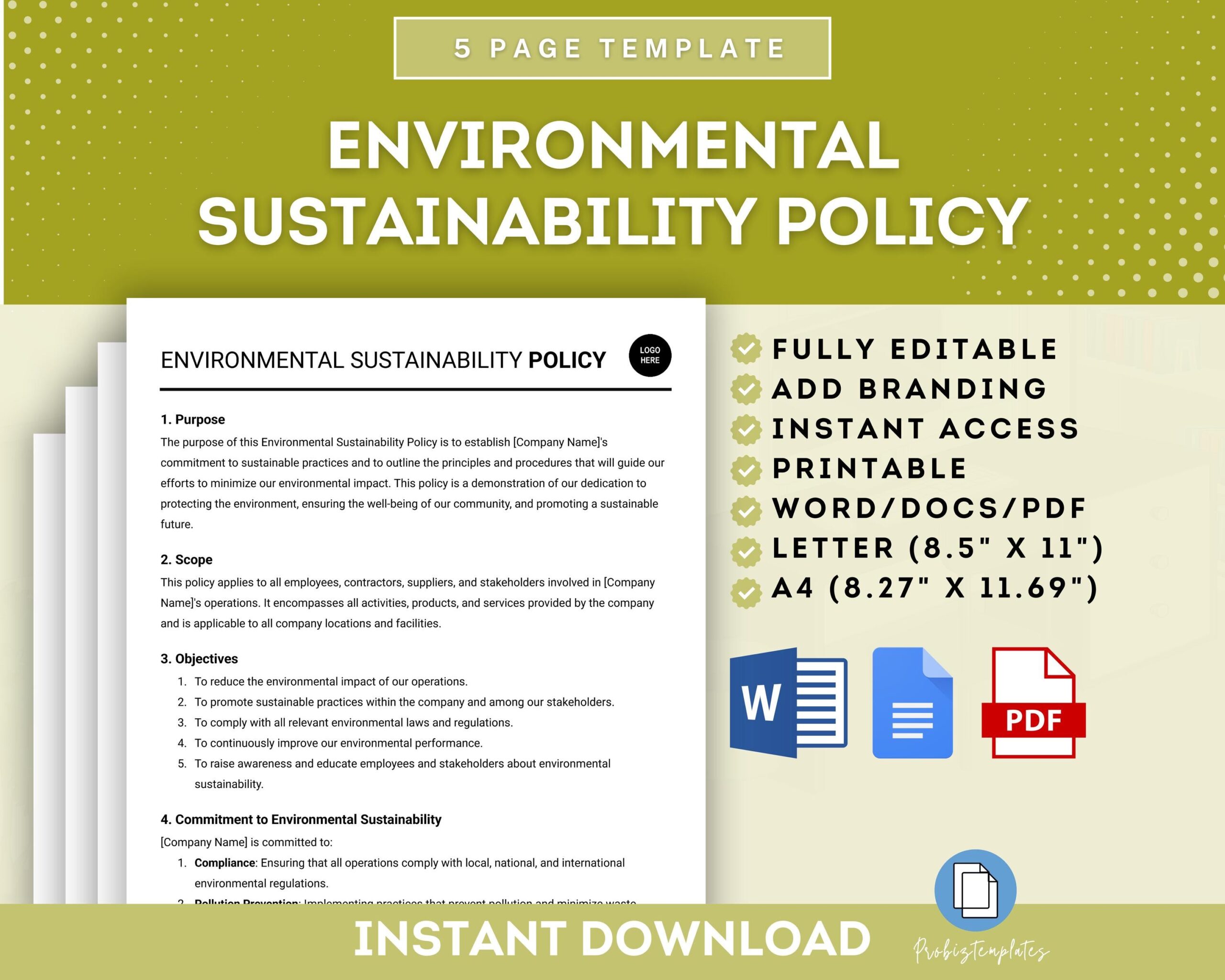
Sustainability Policy: Turning Commitments Into Action
A sustainability policy sets out how an organization will reduce its environmental impact, support people and communities, and make responsible decisions over time. It turns broad values into practical commitments that can guide everyday work, long-term planning, and partnerships.
What a Sustainability Policy Covers
Sustainability is about more than conserving energy or reducing waste. A well-rounded policy considers the connections between environmental health, social well-being, and responsible economic activity. Depending on an organization’s work, it may address:
- Environmental responsibility: Energy and water use, emissions, waste, purchasing, travel, and protection of natural resources.
- Social responsibility: Inclusion, accessibility, worker well-being, human rights, and relationships with local communities.
- Responsible operations: Ethical decision-making, transparent practices, and the careful use of resources.
From Principles to Practical Goals
A policy is most effective when it leads to clear, achievable action. Organizations can begin by reviewing their current practices and identifying where improvements would have the greatest impact. They can then set measurable goals, assign responsibility, and establish a realistic timeline.
For example, an organization might aim to reduce paper use, choose more efficient equipment, improve recycling and waste reduction, or consider environmental and social factors when selecting suppliers. The right priorities will depend on the organization’s activities, resources, and the needs of the communities it serves.
Involve the People Affected
Sustainability efforts are stronger when employees, volunteers, partners, and community members have opportunities to contribute. Listening to different perspectives can reveal practical concerns and help ensure that decisions are fair and relevant. Clear communication also helps people understand how they can take part.
Measure Progress and Keep Improving
Regularly reviewing progress helps an organization understand what is working and where changes are needed. Useful measures may include energy or water consumption, waste generated, participation in training, or progress toward specific community goals. Sharing results honestly—including challenges—supports accountability and builds trust.
A sustainability policy should be reviewed periodically so it can respond to new information, changing needs, and lessons learned. The goal is not simply to publish a statement, but to make responsible practices part of everyday decisions.
A Shared Responsibility
Building a more sustainable future takes consistent effort and cooperation. By setting clear priorities, involving stakeholders, and tracking progress, organizations can make meaningful improvements while encouraging others to do the same. A thoughtful sustainability policy provides a foundation for that work—and a way to turn good intentions into lasting action.
Sustainability Policies: Definitions, Types, and Examples
- What are the three sustainable policies?
- What is an example of a sustainability policy?
- Can you give me an example of a sustainable policy?
- What are the four types of sustainability?
- What are sustainability policies?
What are the three sustainable policies?
The three commonly recognized pillars of sustainability are environmental, social, and economic sustainability. Environmental sustainability focuses on protecting natural resources and reducing pollution; social sustainability supports human rights, health, equity, and community well-being; and economic sustainability promotes long-term prosperity through responsible, resilient practices. Together, these principles help organizations make decisions that benefit people, the planet, and the economy.
What is an example of a sustainability policy?
An example of a sustainability policy is a company commitment to reduce its environmental impact by cutting energy use and greenhouse gas emissions, minimizing waste, conserving water, and choosing responsibly sourced products. The policy might set measurable goals—such as reducing office energy consumption by 20% within five years—assign responsibility for tracking progress, and require regular updates to employees and stakeholders. A strong policy also considers people by promoting safe, inclusive workplaces and responsible relationships with suppliers and local communities.
Can you give me an example of a sustainable policy?
A sustainable purchasing policy is one example: it asks an organization to consider a product’s environmental and social impact before buying it. The policy might prioritize durable, energy-efficient, reusable, or recycled products; favor suppliers with responsible labor and environmental practices; and reduce unnecessary packaging. It can also include clear goals—such as cutting single-use items—and regular reviews to measure progress and identify improvements.
What are the four types of sustainability?
The four commonly recognized types of sustainability are environmental, social, economic, and cultural. Environmental sustainability focuses on protecting natural resources and ecosystems; social sustainability promotes well-being, equity, and strong communities; economic sustainability supports long-term prosperity and responsible use of resources; and cultural sustainability helps preserve cultural heritage, knowledge, and identity. Some frameworks group or define these areas differently, but together they offer a broad way to consider how decisions affect people, the planet, and future generations.
What are sustainability policies?
Sustainability policies are guidelines that explain how an organization will reduce its environmental impact, support people and communities, and use resources responsibly. They often cover areas such as energy use, waste reduction, purchasing, workplace practices, and community engagement. By setting clear goals and responsibilities, these policies help turn sustainability commitments into practical actions and measurable progress.