
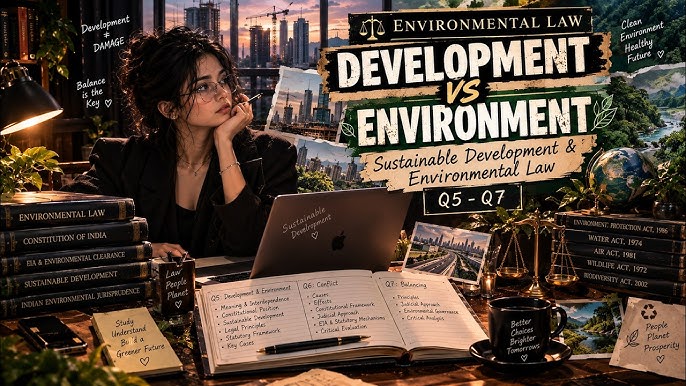
Sustainable Development in Environmental Law
Sustainable development is the pursuit of human well-being and economic opportunity while protecting the natural systems that make life possible. In environmental law, it provides a framework for balancing development with the responsible use of land, water, energy, and other resources. The goal is not to stop all development, but to guide decisions so that present needs can be met without undermining the ability of future generations to meet theirs.
From Principle to Legal Framework
The idea of sustainable development gained broad international recognition in the late twentieth century. It has since influenced environmental agreements, national laws, public policies, and court decisions around the world. Although its precise meaning can vary, the concept generally brings together three connected priorities: environmental protection, economic vitality, and social well-being.
Environmental law gives these priorities practical force. It can set limits on pollution, protect sensitive habitats, require review of proposed projects, and establish processes for public participation. It can also encourage cleaner technology and more efficient use of resources. In this way, the law shapes not only whether development occurs, but how it is planned and carried out.
Key Principles
Prevention and Precaution
Preventing environmental harm is often more effective than trying to repair it later. Laws that require pollution controls, environmental assessments, or protective standards can help identify risks before damage occurs. The precautionary principle supports taking reasonable steps to address serious threats even when some scientific uncertainty remains. The details of how this principle applies differ among legal systems.
Intergenerational Equity
Sustainable development recognizes that natural resources and environmental quality are shared across generations. Decisions about forests, fisheries, groundwater, and climate pollution can have consequences lasting decades or longer. Laws that conserve resources and prevent irreversible damage can help preserve options for people in the future.
Polluter Pays
The polluter-pays principle holds that those responsible for pollution should bear appropriate costs for preventing, controlling, or remedying it. This approach can discourage harmful practices and reduce the burden placed on communities and public funds. Depending on the law, responsibility may include cleanup costs, compliance expenses, penalties, or compensation for harm.
Public Participation and Environmental Justice
People affected by environmental decisions need meaningful opportunities to understand and influence them. Public notice, access to information, hearings, and consultation can improve decision-making and strengthen accountability. Environmental justice adds an important question: Are pollution and environmental benefits distributed fairly, or are particular communities carrying a disproportionate share of the risks?
How Environmental Law Supports Sustainable Development
Environmental laws use a range of tools to turn broad goals into requirements and incentives. Permitting systems can set conditions for facilities that emit pollution or use natural resources. Environmental review can help decision-makers assess potential effects and consider alternatives before approving major projects. Protected areas and land-use rules can safeguard ecosystems, while waste and recycling laws can reduce pressure on landfills and raw materials.
Climate laws and policies are another growing part of the picture. Measures that reduce greenhouse gas emissions, improve energy efficiency, and support resilient infrastructure can help align economic activity with climate goals. When designed well, these measures may also improve public health, create new industries, and reduce long-term costs from climate-related hazards.
Environmental law can also encourage progress through economic tools. Grants, tax incentives, emissions trading systems, and performance standards may promote investment in cleaner energy and technology. Their effectiveness depends on clear rules, reliable oversight, and safeguards to ensure that environmental benefits are real and fairly distributed.
Challenges in Practice
Balancing competing interests is rarely simple. A project may promise jobs and public benefits while also threatening wildlife habitat, clean water, or the rights and well-being of nearby residents. Decision-makers must weigh evidence, consider alternatives, and apply the law consistently. Short-term economic pressures can make it difficult to account for long-term environmental costs.
Enforcement is another challenge. Strong legal standards have limited effect if agencies lack resources to monitor compliance or respond to violations. Overlapping rules and divided responsibilities can also create confusion. Effective implementation depends on capable institutions, transparent decisions, accessible information, and meaningful consequences for noncompliance.
Scientific uncertainty and changing conditions add complexity. Environmental systems are interconnected, and impacts may emerge gradually or cross political boundaries. Laws and policies therefore need ways to incorporate new evidence, review outcomes, and adjust when original assumptions prove incomplete.
Building a More Sustainable Legal Approach
A durable approach to sustainable development begins early in the planning process. Considering environmental effects before decisions are locked in can reveal less harmful alternatives and reduce conflict. It is also important to include local knowledge and the perspectives of communities that may be affected, especially those with limited access to decision-making.
Clear standards, strong enforcement, and regular evaluation help ensure that commitments lead to measurable results. Governments can coordinate across agencies and jurisdictions, while businesses can adopt responsible practices that go beyond minimum legal requirements. Public reporting and accessible environmental data make it easier to track progress and hold decision-makers accountable.
Conclusion
Sustainable development gives environmental law a long-term purpose: enabling human communities to thrive while maintaining the ecological foundations on which they depend. Achieving that balance requires more than written rules. It calls for thoughtful planning, fair participation, effective enforcement, and a willingness to adapt as circumstances change. When these elements work together, environmental law can help guide development toward outcomes that are healthier, more resilient, and more equitable.
This article is for general informational purposes and is not legal advice.
Understanding Sustainable Development in Environmental Law: 8 Key Questions Answered
- What does sustainable development mean in environmental law?
- How does environmental law balance economic growth with environmental protection?
- What is an environmental impact assessment, and when is it required?
- How do environmental laws protect the rights of future generations?
- What is the polluter-pays principle?
- How can the public participate in environmental decision-making?
- How does environmental law address environmental justice?
- What legal tools encourage businesses to adopt sustainable practices?
What does sustainable development mean in environmental law?
In environmental law, sustainable development means meeting society’s current needs while protecting natural resources and ecosystems so future generations can meet theirs. It guides laws and decisions that balance economic growth and social well-being with environmental protection—for example, by limiting pollution, conserving resources, assessing the environmental impacts of projects, and involving affected communities in decisions.
How does environmental law balance economic growth with environmental protection?
Environmental law balances economic growth with environmental protection by setting rules that limit pollution and conserve natural resources while allowing development to proceed responsibly. Tools such as environmental impact reviews, permits, emissions standards, and land-use requirements help identify risks, reduce harm, and guide projects toward less damaging alternatives. Laws may also encourage cleaner technologies and efficient resource use through incentives and performance standards. The goal is not to prevent growth, but to ensure that its benefits do not come at the expense of public health, ecosystems, or the needs of future generations.
What is an environmental impact assessment, and when is it required?
An environmental impact assessment (EIA) is a process for identifying and evaluating the likely environmental effects of a proposed project, such as a highway, mine, or power plant, before a decision is made. It may examine impacts on air and water quality, wildlife, natural resources, and nearby communities, as well as possible alternatives and ways to reduce harm. Whether an EIA is required depends on the applicable laws and the project’s location, type, and potential effects; it is often required for certain government actions or projects that may have significant environmental impacts. Because requirements and procedures vary by jurisdiction, project proponents should check the relevant local, state, and federal rules.
How do environmental laws protect the rights of future generations?
Environmental laws protect the rights and interests of future generations by limiting pollution, conserving natural resources, protecting ecosystems, and requiring decision-makers to consider the long-term effects of proposed projects and policies. Principles such as intergenerational equity encourage governments and businesses to meet today’s needs without leaving future communities with depleted resources or lasting environmental harm. Public participation, environmental reviews, and long-term conservation measures can also help ensure that decisions reflect responsibilities beyond the immediate interests of the present.
What is the polluter-pays principle?
The polluter-pays principle holds that those responsible for causing pollution should bear the costs of preventing, controlling, and remedying the environmental harm they create. These costs may include pollution-control measures, cleanup, or compensation, depending on applicable law. By placing responsibility on polluters rather than the public, the principle can encourage businesses and individuals to reduce pollution and use resources more responsibly.
How can the public participate in environmental decision-making?
The public can participate in environmental decision-making by reviewing proposed projects and regulations, submitting written comments, attending public hearings, and sharing local knowledge with government agencies. Many processes also allow community members to request environmental records, join advisory groups, or raise concerns through elected representatives and public-interest organizations. Participation is most effective when people get involved early, meet deadlines, and explain how a decision may affect their community, health, or environment. The specific opportunities and procedures vary by jurisdiction and type of decision.
How does environmental law address environmental justice?
Environmental law addresses environmental justice by seeking to ensure that all communities—including those historically burdened by pollution—have a meaningful voice in decisions that affect their health and environment. Depending on the jurisdiction, laws and policies may require public notice and participation, assess a project’s effects on nearby communities, consider cumulative pollution burdens, prohibit discrimination, and provide ways to report violations or seek remedies. These measures can help identify and reduce unequal impacts, though their effectiveness depends on fair implementation, strong enforcement, and meaningful access to decision-making.
What legal tools encourage businesses to adopt sustainable practices?
Environmental law encourages businesses to adopt sustainable practices through a mix of requirements and incentives. Regulations and permits can set limits on pollution, waste, emissions, and resource use, while environmental impact reviews may require companies to assess risks before starting major projects. Governments can also offer tax credits, grants, or other incentives for investments such as renewable energy and energy efficiency. Emissions trading programs and fees can make pollution costly while rewarding reductions, and disclosure rules can help investors and consumers evaluate a company’s environmental performance. Enforcement, liability for environmental damage, and sustainability standards in public contracts can further encourage businesses to prevent harm and improve their practices.