
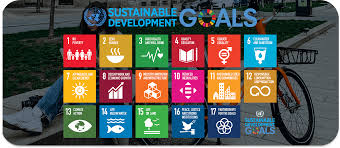
The UN’s 17 Sustainable Development Goals
In 2015, all United Nations Member States adopted the 2030 Agenda for Sustainable Development. At its heart are 17 Sustainable Development Goals (SDGs): a shared plan to improve people’s lives, protect the planet, and promote peace and prosperity. The goals are intended for every country and are closely connected—progress in one area can support progress in others.
The 17 Goals
- No Poverty: End poverty in all its forms everywhere, while strengthening social protection and access to basic resources and services.
- Zero Hunger: End hunger, improve nutrition, achieve food security, and support sustainable agriculture.
- Good Health and Well-Being: Promote health and well-being for people of all ages, including access to essential health services.
- Quality Education: Ensure inclusive and equitable quality education and expand lifelong learning opportunities for all.
- Gender Equality: Achieve gender equality and empower all women and girls.
- Clean Water and Sanitation: Ensure the availability and sustainable management of water and sanitation for all.
- Affordable and Clean Energy: Expand access to reliable, sustainable, modern, and affordable energy.
- Decent Work and Economic Growth: Promote inclusive and sustainable economic growth, productive employment, and decent work for all.
- Industry, Innovation and Infrastructure: Build resilient infrastructure, support sustainable industrial development, and encourage innovation.
- Reduced Inequalities: Reduce inequality within and among countries.
- Sustainable Cities and Communities: Make cities and communities inclusive, safe, resilient, and sustainable.
- Responsible Consumption and Production: Encourage sustainable patterns of consumption and production and reduce waste.
- Climate Action: Take urgent action to address climate change and its impacts.
- Life Below Water: Conserve and sustainably use oceans, seas, and marine resources.
- Life on Land: Protect and restore terrestrial ecosystems, sustainably manage forests, combat desertification, and halt biodiversity loss.
- Peace, Justice and Strong Institutions: Promote peaceful and inclusive societies, provide access to justice, and build effective, accountable institutions.
- Partnerships for the Goals: Strengthen the means to achieve the goals through cooperation, finance, technology, trade, and global partnerships.
Why the Goals Matter
The SDGs recognize that challenges such as poverty, poor health, inequality, environmental damage, and conflict are linked. For example, access to education can improve employment opportunities, while clean energy can support economic development and help reduce greenhouse gas emissions. Lasting progress depends on solutions that consider these connections.
The goals also call for action at every level. Governments can shape public policy and invest in essential services. Businesses can improve working conditions and reduce the environmental impact of their operations. Community organizations and individuals can support local initiatives, make informed choices, and hold institutions accountable.
Turning Commitments into Progress
The 2030 Agenda provides a common framework, but achieving the goals requires sustained effort and cooperation. Progress can be measured using targets and indicators, helping countries and communities identify needs, track results, and direct resources where they can make a difference. Because circumstances vary, each country determines how to apply the goals in its own context while contributing to the shared global agenda.
The Sustainable Development Goals offer a practical vision of a more equitable and sustainable future. Their success depends on turning that vision into action—and ensuring that progress reaches everyone, especially people and communities facing the greatest barriers.
5 Key Benefits of the UN’s 17 Sustainable Development Goals: A Path to a Better World
- Provide a shared global plan to reduce poverty and hunger.
- Promote access to quality education and health care.
- Advance gender equality and reduce inequalities.
- Encourage climate action and environmental protection.
- Support cooperation for a more peaceful, sustainable future.
Challenges Facing the UN’s 17 Sustainable Development Goals: Addressing Measurement, Funding, and Accountability Issues
- The goals are broad and difficult to measure consistently.
- Progress varies widely between countries and communities.
- Funding is insufficient to achieve many targets.
- Some goals can conflict, such as growth and environmental protection.
- The 2030 deadline is ambitious and may be missed.
- Voluntary commitments can lack strong accountability.
- Global targets may not fully reflect local needs.
Provide a shared global plan to reduce poverty and hunger.
The UN’s 17 Sustainable Development Goals provide countries with a shared global plan to reduce poverty and hunger. By setting common priorities—such as expanding access to food, education, health care, decent work, and social support—the goals encourage governments, organizations, and communities to coordinate their efforts. This shared framework helps direct attention and resources toward people most in need and supports lasting solutions, including sustainable agriculture and stronger economic opportunities.
Promote access to quality education and health care.
The UN’s 17 Sustainable Development Goals promote access to quality education and health care as essential foundations for a fairer, healthier future. Quality education helps people build knowledge and skills, broaden their opportunities, and participate more fully in their communities. Accessible, reliable health care supports well-being, helps prevent and treat illness, and enables people to learn and work. By encouraging countries to invest in inclusive schools and health services, the goals aim to reduce inequalities and improve quality of life for people of all ages.
Advance gender equality and reduce inequalities.
The UN’s 17 Sustainable Development Goals promote gender equality and work to reduce inequalities within and among countries. They call for equal rights, opportunities, and access to education, health care, decent work, and leadership for women and girls, while also addressing discrimination and barriers faced by marginalized communities. By encouraging inclusive policies and fair access to resources, the goals help more people participate fully in society and share in its social and economic progress.
Encourage climate action and environmental protection.
One important benefit of the UN’s 17 Sustainable Development Goals is that they encourage climate action and environmental protection. Goals such as Climate Action, Life Below Water, and Life on Land call for reducing pollution and greenhouse gas emissions, conserving natural resources, and protecting ecosystems and biodiversity. Together, they promote practical steps—from expanding clean energy to restoring forests—that can help communities respond to climate change and safeguard the planet for future generations.
Support cooperation for a more peaceful, sustainable future.
The UN’s 17 Sustainable Development Goals encourage countries, communities, businesses, and individuals to work together toward a more peaceful and sustainable future. By building partnerships, sharing knowledge and resources, and addressing challenges such as poverty, inequality, and climate change collectively, people can create solutions that benefit more communities. This cooperation strengthens trust, supports peace, and helps ensure that progress is inclusive and lasting.
The goals are broad and difficult to measure consistently.
One challenge of the UN’s 17 Sustainable Development Goals is that their broad scope can make progress difficult to measure consistently. The goals cover complex issues—from poverty and health to climate change and justice—and countries may interpret targets differently or use different data sources and methods. As a result, comparisons across regions and over time can be challenging, making it harder to determine how much progress has been made and where additional action is most needed.
Progress varies widely between countries and communities.
One challenge of the UN’s 17 Sustainable Development Goals is that progress varies widely between countries and communities. Differences in funding, infrastructure, political stability, and access to technology can make it easier for some places to advance while others struggle to meet basic needs. Inequality within countries also means that national improvements may not benefit every community equally. As a result, global progress can be uneven, and reaching the goals requires solutions tailored to local circumstances and greater support for those facing the biggest barriers.
Funding is insufficient to achieve many targets.
A major challenge facing the UN’s 17 Sustainable Development Goals is the lack of funding needed to achieve many of their targets. Governments and organizations often have limited resources, while priorities such as healthcare, education, clean energy, and climate action require sustained investment. When funding falls short, projects may be delayed or scaled back, leaving communities without essential services and making it harder for countries—especially lower-income nations—to meet their commitments by 2030.
Some goals can conflict, such as growth and environmental protection.
One challenge of the UN’s 17 Sustainable Development Goals is that some priorities can pull in different directions. For example, economic growth may create jobs and reduce poverty, but it can also increase resource use, pollution, and greenhouse gas emissions if it is not managed sustainably. Balancing development with environmental protection requires careful planning, strong policies, and choices that support people’s needs without causing lasting harm to the planet.
The 2030 deadline is ambitious and may be missed.
The 2030 deadline for achieving the UN’s 17 Sustainable Development Goals is highly ambitious, and many targets may not be met on time. Progress depends on sustained funding, effective policies, international cooperation, and the ability to respond to challenges such as conflict, economic instability, and climate change. When these factors slow progress, countries may fall behind, making it harder to deliver improvements in areas such as poverty reduction, education, health, and environmental protection by the target date.
Voluntary commitments can lack strong accountability.
One challenge of the UN’s 17 Sustainable Development Goals is that many commitments are voluntary, which can make accountability difficult to enforce. Countries and organizations may set targets or report on progress, but there are limited consequences when promises are delayed or unmet. As a result, progress can depend heavily on political priorities, available resources, and public pressure, making it harder to ensure consistent action toward the goals.
Global targets may not fully reflect local needs.
One potential drawback of the UN’s 17 Sustainable Development Goals is that global targets may not fully reflect local needs. Countries and communities differ in their cultures, resources, economies, and most urgent challenges, so a universal framework can sometimes overlook important local priorities. If goals are applied without meaningful input from the people affected, policies may be less effective or resources may be directed away from the issues communities consider most pressing. Adapting the goals to local circumstances while preserving their shared aims can help address this concern.